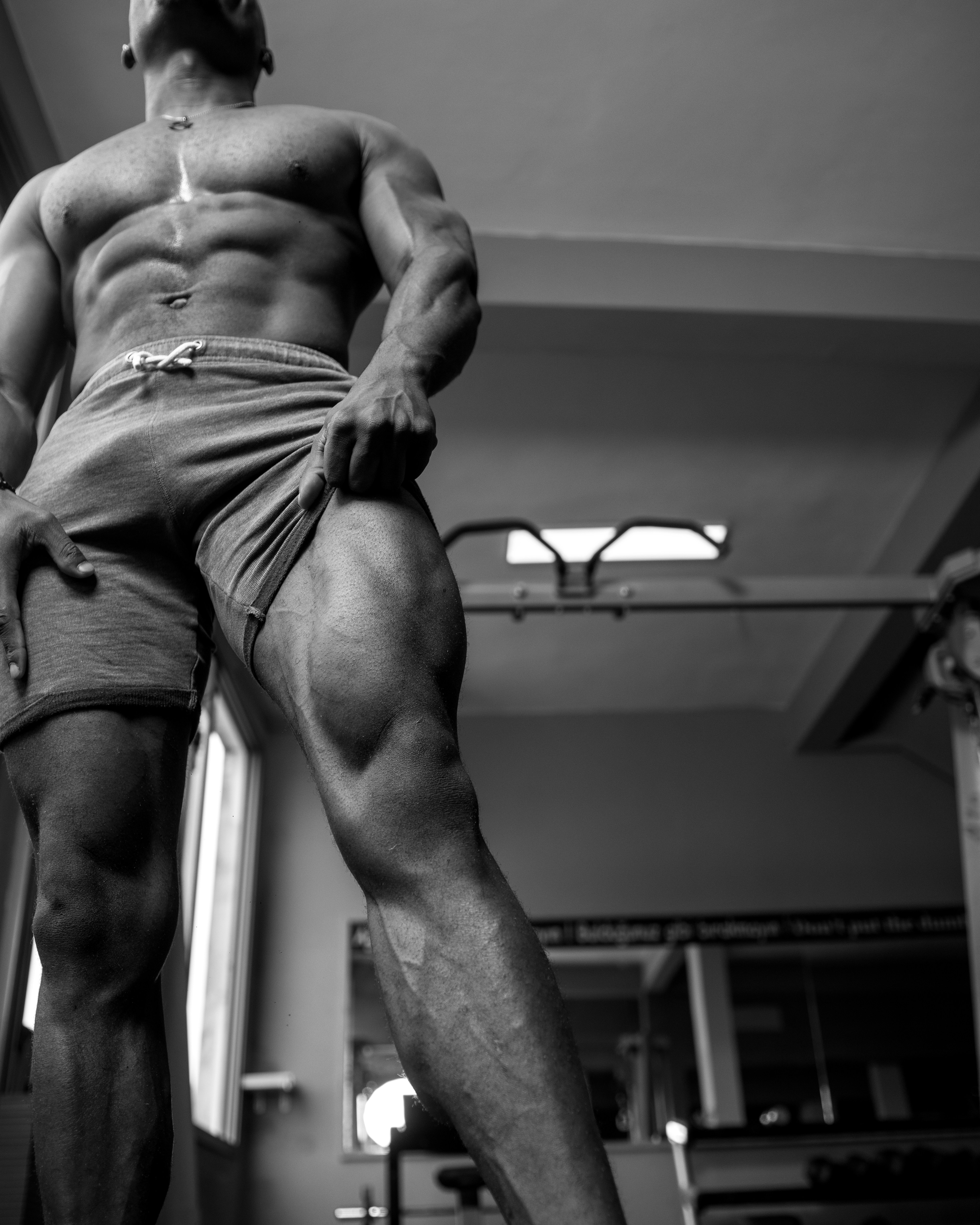
Understanding the Basics of Leg Muscles
The human leg is composed of several crucial muscle groups that significantly contribute to mobility, stability, and overall physical performance. Key muscle groups in the legs include the quadriceps, hamstrings, glutes, and calves, each serving distinct yet interrelated functions. Understanding these muscle groups and their roles can enhance not only athletic performance but also everyday activities.
The quadriceps, located at the front of the thigh, consist of four individual muscles that work together to extend the knee. This action is essential during walking, running, and jumping. The quadriceps are instrumental in many sports, providing the strength needed for powerful leg movements. Strong quadriceps help prevent knee injuries by supporting the joint and maintaining its alignment during physical activities.
In contrast, the hamstrings, which are situated at the back of the thigh, play a pivotal role in bending the knee and hip extension. This muscle group consists of three muscles and is essential for sprinting, cycling, and other dynamic movements. While often overshadowed by their antagonistic counterparts, strong hamstrings are vital for maintaining balance and proper posture, reducing the risk of injury, especially in high-impact sports.
The gluteal muscles, commonly referred to as the glutes, form the posterior aspect of the hip and play a significant role in hip stability, powerful movements like running, and even in everyday tasks such as climbing stairs. These muscles generate strength and power from the lower body, directly impacting athletic performance in activities such as jumping and sprinting.
Lastly, the calf muscles, which comprise the gastrocnemius and soleus, facilitate foot movement and stability during activities like walking, hopping, and running. Calf strength is critical for activities that involve pushing off the ground, as they aid in the propulsion needed during sprints and other dynamic drills.
In summary, the quadriceps, hamstrings, glutes, and calves are foundational to leg strength and athleticism. A balanced exercise routine that targets these major muscle groups can enhance performance, prevent injuries, and support overall leg function.
Top Leg Exercises for Building Strength
Developing leg strength is essential for overall fitness and athletic performance. A well-rounded leg workout regimen incorporates both compound and isolation exercises to maximize muscle engagement and strength development. Below, we outline some of the most effective leg exercises, focusing on their execution, target muscles, and benefits.
Squats: Squats are a fundamental exercise in any strength training program. They primarily target the quadriceps, hamstrings, and glutes. To perform a squat, begin by standing with your feet shoulder-width apart and your toes slightly pointed outward. Lower your body by bending your knees and hips, keeping your chest up and back straight. Descend until your thighs are parallel to the ground or lower, then return to the starting position. Squats enhance leg strength and improve overall stability and mobility.
Deadlifts: Deadlifts are another compound movement that effectively targets the posterior chain, which includes the hamstrings, glutes, and lower back. To execute a deadlift, stand with your feet hip-width apart and grip the barbell with both hands. With your back flat and chest up, lift the barbell by extending your hips and knees simultaneously until you are standing upright. Deadlifts not only build leg strength but also engage the core, making them an excellent full-body exercise.
Leg Press: The leg press machine is a convenient option for targeting the quadriceps, hamstrings, and glutes. To use the leg press, sit in the machine with your back against the pad and feet placed shoulder-width apart on the platform. Push the platform away by extending your legs until they are almost fully extended, then slowly return to the starting position. The leg press is beneficial for isolating the lower body without the need for balance, making it suitable for individuals of all fitness levels.
Lunges: Lunges are an effective unilateral exercise that helps improve balance and coordination while targeting the quadriceps, hamstrings, and glutes. To perform a lunge, step forward with one leg and lower your body until both knees are bent at about 90-degree angles. Be sure to keep your front knee aligned with your ankle. Push back to the starting position and repeat with the other leg. Lunges can be performed in various forms, including walking, reverse, and side lunges.
Incorporating these exercises into a leg training routine can significantly enhance strength and muscle growth. Each movement offers unique advantages and can be adjusted to match individual fitness levels, ensuring a comprehensive approach to leg development.
Best Practices for Muscle Growth in Leg Workouts
To achieve optimal muscle growth in leg workouts, it is essential to implement several best practices that focus on progressive overload, adequate volume, and sufficient recovery. These principles function synergistically to facilitate strength gains and hypertrophy.
The concept of progressive overload is fundamental to muscle development. It involves systematically increasing the resistance or intensity of your leg exercises over time. This can be achieved by gradually adding weight to your lifts, increasing the number of repetitions, or incorporating more challenging variations of exercises, such as transitioning from standard squats to front squats. This consistent challenge encourages the muscles to adapt and grow.
Another crucial aspect is managing the volume of your workouts. Volume refers to the total amount of weight lifted throughout a training session, commonly expressed as sets multiplied by repetitions. For optimal muscle growth, it is advisable to target 10-20 sets per muscle group per week, spread across multiple sessions. Studies indicate that working within a range of six to twelve repetitions per set can effectively stimulate hypertrophy while also enhancing muscular endurance.
Furthermore, strategic rest periods between sets can significantly impact your performance and recovery. A rest interval of 60 to 90 seconds is often recommended for hypertrophy-focused training, as it allows for sufficient recuperation without losing the muscle pump or intensity. This balance is vital to maintaining a high level of performance throughout the workout.
Incorporating exercises such as squats, deadlifts, lunges, and leg presses can create a comprehensive and effective leg workout routine. Each exercise targets different muscles, ensuring a well-rounded approach to strength and growth. Additionally, varying the tempo of your repetitions—like slowing down the eccentric phase—can further enhance the effectiveness of your training.
Ultimately, combining progressive overload, adequate volume, and appropriate recovery strategies will yield significant gains in muscle strength and size, especially in leg workouts. Adhering to these principles is essential for anyone looking to maximize their leg training effectiveness.
Incorporating Variations and Advanced Techniques
To maximize strength and muscle growth in leg exercises, incorporating variations and advanced techniques is essential. These methods not only break the monotony of standard routines but also challenge the muscles in new ways, promoting greater adaptations over time. One effective approach is the inclusion of plyometric exercises, which utilize explosive movements to improve power and strength. Exercises like jump squats or box jumps can enhance overall leg performance while also improving coordination and stability.
Another technique to consider is the implementation of supersets. This involves performing two exercises back-to-back without rest, targeting either the same muscle group for greater fatigue or opposing muscle groups for balanced development. For example, pairing squats with lunges can efficiently train the quadriceps, hamstrings, and glutes in a single session, leading to increased muscle engagement and growth.
Resistance bands provide an excellent tool for adding resistance to conventional leg exercises. They can be used during squats, hip thrusts, and side steps to create tension throughout the movement, challenging the muscles even further. Additionally, incorporating weights into leg workouts can significantly heighten the intensity and, consequently, the effectiveness of the exercises. Utilizing barbells for squats or dumbbells for lunges allows for progressive overload, a key component in promoting muscle hypertrophy.
Furthermore, variations of traditional exercises, such as sumo squats or Bulgarian split squats, target different muscle fibers and promote balanced muscular development. These alternative angles of resistance can lead to enhanced strength outputs and aesthetic gains. To optimize leg day workouts, it is advisable to regularly rotate and blend these advanced techniques and variations into your routine, ensuring continual progression and avoiding plateaus.