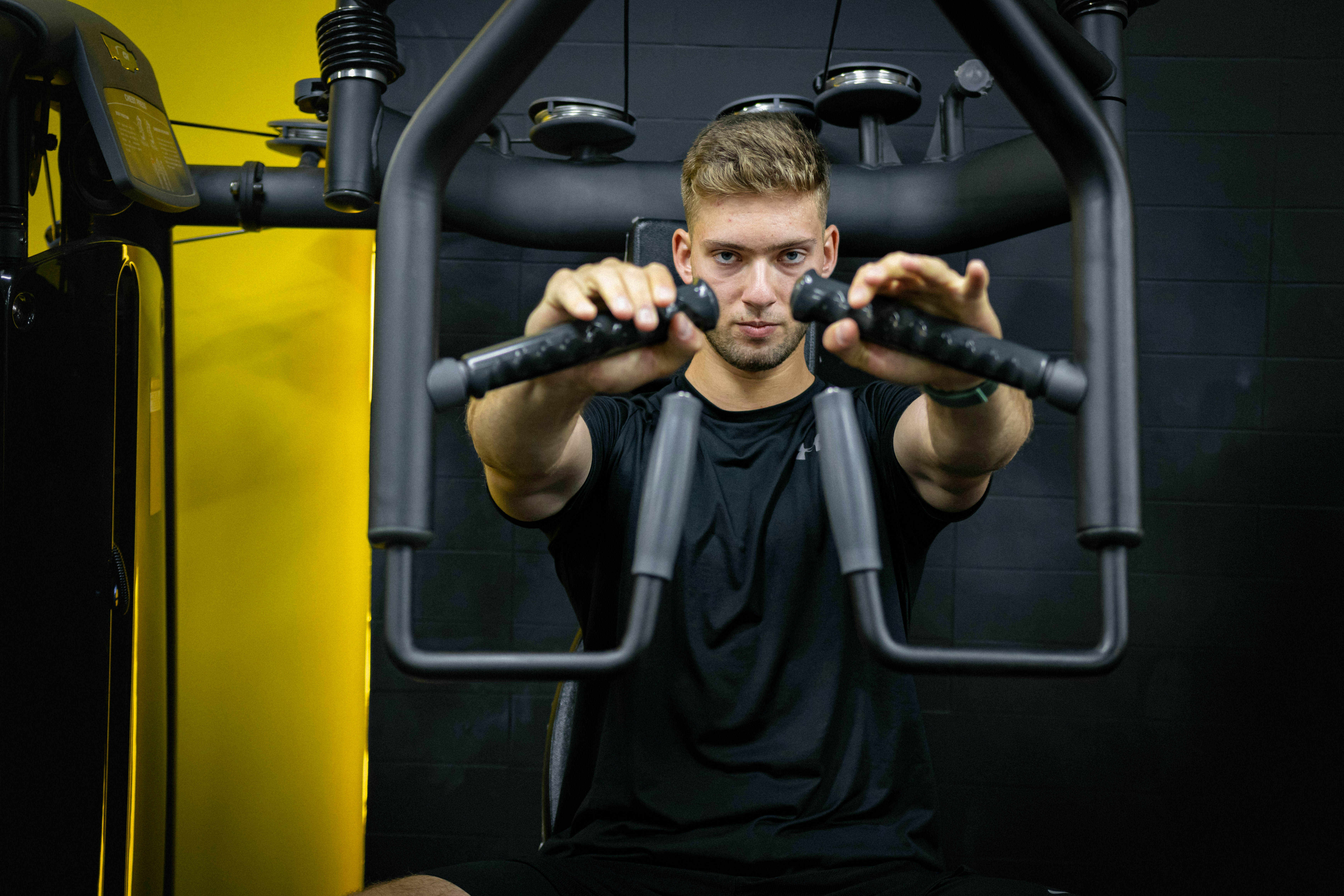
Understanding Chest Anatomy
The chest region is primarily comprised of two major muscles: the pectoralis major and the pectoralis minor. Each of these muscle groups plays a significant role in the overall functionality and strength of the upper body. Understanding the anatomy of these muscles is essential for implementing effective chest workouts that promote muscle growth.
The pectoralis major is a large, fan-shaped muscle that covers the upper front of the chest. It is responsible for various movements such as flexion, extension, and rotation of the shoulder joint. This muscle can be divided into two portions: the clavicular head, which assists in shoulder flexion, and the sternal head, which aids in shoulder adduction and internal rotation. Exercises like bench presses and push-ups predominantly target the pectoralis major, effectively stimulating muscle fibers and promoting hypertrophy.
The pectoralis minor, located beneath the pectoralis major, is a smaller muscle that aids in stabilizing and moving the scapula. This muscle attaches to the third, fourth, and fifth ribs and connects to the coracoid process of the scapula. Its primary functions include shoulder stabilization and facilitating movements such as protraction and depression of the scapula. While it may not be as visually prominent as the pectoralis major, the pectoralis minor plays a crucial role in overall chest aesthetics and functionality.
Understanding which exercises target these muscles is vital for anyone aiming to enhance chest muscle growth. Compound movements like bench presses engage the pectoralis major effectively, while isolation exercises such as chest flies emphasize the stretch and contraction of both the major and minor muscles, ensuring well-rounded development. Incorporating a diverse range of exercises into a strength training routine can optimize results and lead to increased muscle size and strength in the chest area.
Key Principles for Chest Training
Building chest muscle effectively relies on a few fundamental principles that every individual, regardless of experience, should adhere to. The primary concept is **progressive overload**, which entails gradually increasing the weight, frequency, or number of repetitions in your workouts. By consistently challenging the muscles, you stimulate growth and enhance strength over time. For those starting out, it is crucial to begin with weights that can be managed safely while ensuring correct technique to avoid injuries. As strength improves, incrementally increasing the load is essential to maintain progression.
Proper form is another essential aspect of chest training. Executing exercises with the correct posture and movement pattern allows for optimal engagement of the chest muscles while minimizing the risk of injury. For instance, during bench presses or push-ups, maintaining a stable back and controlled motion instills balance in muscle activation and prevents undue strain on the shoulders. Utilization of mirrors or consultation with trainers can significantly aid in perfecting one’s form.
Variation in exercise selection is vital for a well-rounded chest workout routine. Engaging in a variety of exercises that target the chest from different angles can prevent plateaus and foster overall muscle development. Incorporating movements such as incline presses, decline presses, and cable flys not only challenges the muscles but also enhances their overall aesthetic. Additionally, altering the rep ranges can lead to different adaptations; for instance, low-rep ranges build strength while higher reps promote endurance.
Lastly, for both beginners and seasoned lifters, it is advisable to incorporate rest and recovery into training schedules. Muscles grow during recovery, and adequate rest helps in preventing overtraining, which can hinder progress. Overall, incorporating these principles into your chest training regimen will pave the way for enhanced muscle growth and strength gains.
Effective Chest Exercises
When it comes to developing the chest muscles, incorporating a variety of exercises is essential for achieving optimal results. Among the most effective chest workouts are bench press variations, push-ups, and chest flyes. Each exercise targets the chest muscles in unique ways, contributing to enhanced muscle growth and improved strength.
The bench press is a classic exercise that effectively targets the pectoralis major, the primary muscle in the chest. A key benefit of the bench press is its ability to allow for significant weight loads, thus facilitating muscle hypertrophy. Proper technique involves lying flat on a bench with feet firmly planted on the ground. The barbell should be grasped slightly wider than shoulder-width, and it should be lowered to the chest before pressing back upward. Common mistakes include lifting the feet off the ground or flaring the elbows excessively, which can lead to shoulder injuries.
Push-ups offer a versatile and equipment-free alternative that can be performed anywhere. This exercise not only engages the chest but also works the shoulders and triceps, making it an effective compound movement. To execute a push-up correctly, start in a plank position, ensuring the body forms a straight line from head to heels. As you lower your body, maintain tightness in the core and avoid letting the hips sag. A frequent error is allowing the elbows to flare out too wide, which can place undue stress on the shoulders.
Another beneficial exercise is the chest fly, which emphasizes isolation of the chest muscles. This can be performed using dumbbells or cables. The benefit of chest flyes is that they elongate the chest muscles and promote a greater range of motion. To perform a chest fly, lie back on a bench with a dumbbell in each hand. Start with the weights above your chest, elbows slightly bent, and lower the weights outwards in a wide arc before returning to the starting position. A common mistake is overextending the arms, which may lead to joint discomfort, so maintaining a slight elbow bend is crucial for safety.
Integrating these exercises into your workout regimen can significantly enhance chest development. Staying mindful of proper form and common pitfalls will ensure a safe and effective training experience, ultimately leading to the muscle growth you aim for.
Creating an Optimal Chest Workout Routine
Designing a well-structured chest workout routine is essential for maximizing muscle growth and improving overall upper body strength. An effective chest exercise regimen should incorporate a variety of movements that target different areas of the chest, including the upper, middle, and lower portions. This diversity not only prevents workout monotony but also stimulates comprehensive chest development.
When crafting your chest workout, it is crucial to consider the number of sets, repetitions, and frequency. For muscle growth, also known as hypertrophy, a general principle is to perform 3 to 4 sets of 8 to 12 repetitions for each exercise. However, these numbers can vary based on individual fitness levels and training goals. Beginners may start with lighter weights and focus on mastering proper form, so 2 to 3 sets of 10 to 15 reps may suffice initially. As strength builds, individuals can progressively increase the weight and adjust their rep range accordingly.
Additionally, frequency plays a key role. Chest workouts can be incorporated into a broader routine, ideally trained 1 to 2 times per week, allowing sufficient recovery time between sessions. A sample beginner routine may include flat bench press, incline dumbbell press, and push-ups. For intermediate to advanced athletes, incorporating variations such as decline bench press, cable flyes, and dips can further enhance muscle engagement and growth.
Moreover, it is important to integrate proper warm-up exercises along with cooldown stretches after workouts to prevent injuries and aid recovery. Ultimately, structure and progression are essential components in creating an optimal chest workout routine that promotes muscle growth while minimizing the risk of overtraining or injury.