Introduction to Arm Development
Well-defined biceps and triceps are not only a hallmark of physical fitness but also serve a significant function in our daily activities. The importance of these muscle groups extends beyond aesthetics; they are fundamental components of overall arm strength. Biceps contribute to the flexion of the elbow and the rotation of the forearm, whereas triceps are primarily responsible for extending the arm at the elbow. Together, they enable a wide range of movements, making them essential for various physical tasks, from lifting and pushing to pulling and throwing.
Focusing on arm training can lead to considerable benefits. Enhanced biceps and triceps size contributes to improved functional strength, which is vital in sports and exercises that rely on upper body power and endurance. Strong arms also play a crucial role in stabilizing the body during balance-intensive activities, enhancing overall performance and reducing the risk of injury.
Moreover, the aesthetic aspect of arm training should not be overlooked. Well-developed biceps and triceps can enhance the appearance of the physique, lending a sculpted look to anyone’s upper body. This is often a motivating factor for individuals engaging in fitness routines, as it boosts confidence and encourages consistency in training.
Arm training, focusing specifically on biceps and triceps, can also contribute significantly to other exercises. For example, stronger arms will improve performance in compound movements, such as bench presses and rows, due to the increased support and stability provided by enhanced muscle strength. Overall, dedicating time to develop these muscle groups holds both aesthetic and practical advantages, making it a wise focus for anyone looking to elevate their fitness journey.
Key Biceps Exercises for Maximum Growth
When it comes to enhancing the size of your biceps, implementing effective exercises into your workout regimen is crucial. Some of the most effective movements include barbell curls, dumbbell curls, and concentration curls. Each of these exercises targets the biceps in unique ways, promoting optimal muscle growth and strength.
First, let’s examine the barbell curl, which is a staple exercise for building bicep mass. To perform this exercise correctly, stand with your feet shoulder-width apart and grasp the barbell with an underhand grip, keeping your elbows close to your body. As you lift the barbell towards your chest, ensure that you avoid swinging your body or using momentum. This helps isolate the biceps, allowing for a more effective workout. A common mistake is to lift excessively heavy weights, which may compromise form. Aim for three to four sets of 8 to 12 repetitions, progressively increasing the weight as your strength improves.
Next, the dumbbell curl allows for a greater range of motion and can address muscle imbalances between the arms. Start with your arms at your sides, holding a dumbbell in each hand. As you curl the weights upwards, rotate your wrists so that your palms face upward at the peak of the movement. This rotation helps engage the biceps fully. Keep your elbows stationary to maximize the effectiveness of the curl. Similar to the barbell curl, three to four sets of 8 to 12 reps is recommended, with slight increases in weight over time.
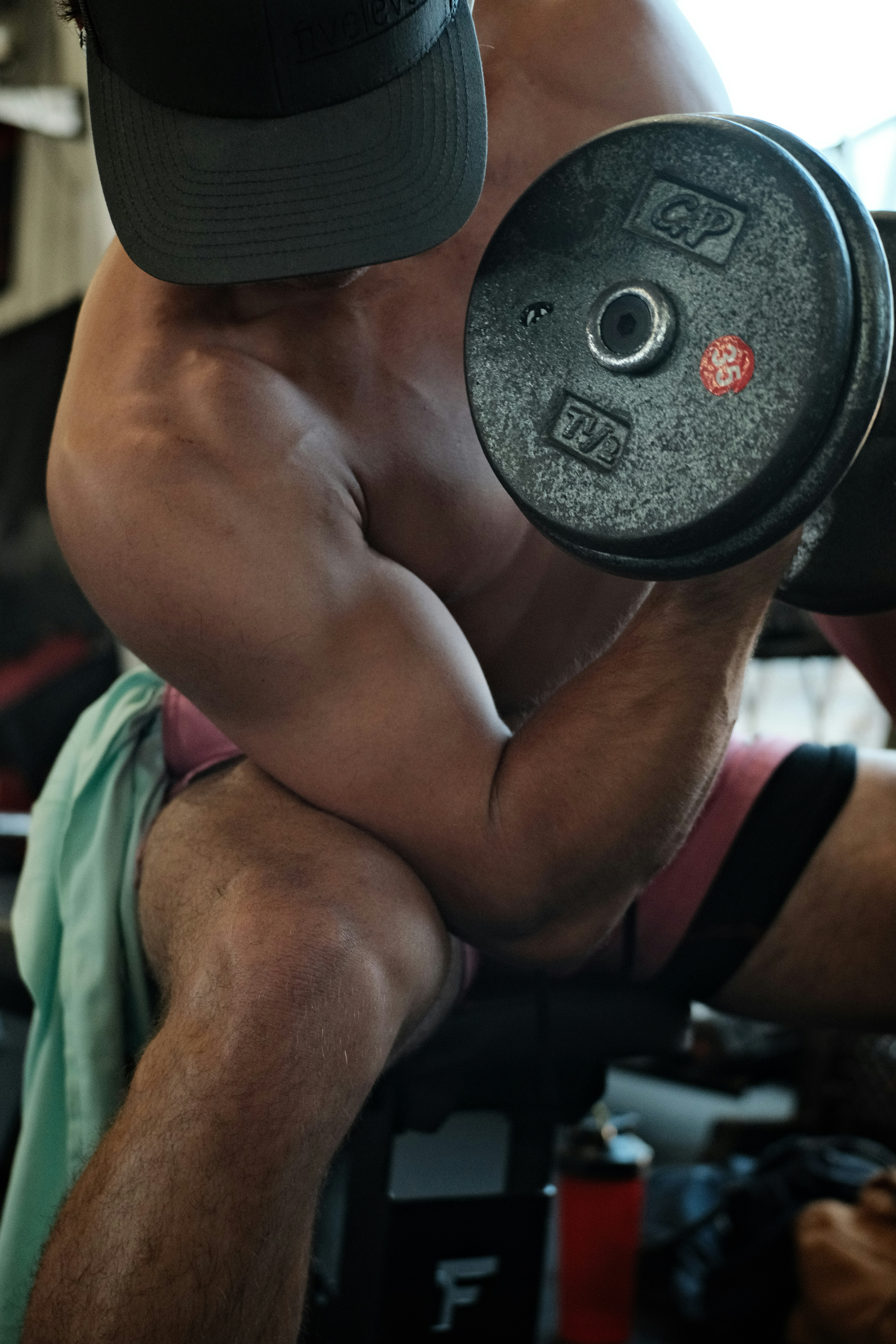
Finally, concentration curls are excellent for isolating the biceps. By sitting at the end of a bench and resting your arm against your inner thigh, you can focus intensively on the bicep during the lift. Be sure to lower the weight slowly to maintain tension on the biceps. It is advisable to execute 3 to 4 sets of 10 to 15 repetitions when performing concentration curls.
To keep your bicep workouts challenging, consider incorporating variations, such as hammer curls or cable curls. These exercises not only target the biceps from different angles but also help prevent plateaus. Overall, maintaining proper technique and gradually increasing your weights is key to achieving maximum biceps growth.
Essential Triceps Workouts for Building Size
The triceps muscle group is crucial for overall arm development and strength. Comprising three distinct heads—the long, lateral, and medial heads—it is essential to focus on exercises that effectively engage all three to achieve maximum growth and definition.
One of the most effective exercises for targeting the triceps is the tricep dip. This compound movement not only activates the triceps but also engages the chest and shoulders. To perform a tricep dip, position yourself between parallel bars or on a sturdy bench, grip the support, and lower your body until your elbows reach a 90-degree angle. Then, push back up to the starting position. It is important to maintain control throughout the movement to prevent injury and maintain focus on the triceps.
Another beneficial exercise is the skull crusher, which isolates the triceps effectively. To execute a skull crusher, lie flat on a bench with a barbell or dumbbells held above your forehead with arms extended. Lower the weights towards your forehead by bending your elbows, then extend back to the start position. Ensure that your elbows remain stationary during the movement to maximize triceps engagement.
The close-grip bench press is also instrumental in training the triceps. By narrowing your grip on the bar, you can shift the emphasis from the chest to the triceps. Lie on a bench with your feet firmly positioned on the ground, and grasp the barbell with a grip that is about shoulder-width apart. Lower the bar to your chest and push it back up. This exercise is particularly beneficial for enhancing overall triceps strength.
For optimal results, consider incorporating these exercises into your weekly training regimen, focusing on varying your rep ranges and weights to continually challenge your triceps. Performing 3-4 sets of 8-12 repetitions for each exercise is often effective for hypertrophy. Always prioritize form and safety to avoid injuries and promote muscle growth.
Creating a Balanced Arm Training Routine
Designing a comprehensive arm workout that effectively targets both the biceps and triceps is crucial for anyone seeking to enhance their arm size and strength. A balanced arm training routine should incorporate exercises that ensure all muscle groups are engaged efficiently, promoting symmetry and muscle growth.
To strategize the frequency of workouts, it is recommended to train the arms at least twice a week. This allows sufficient stimulus for hypertrophy while providing ample time for recovery. Depending on individual fitness levels, one can incorporate higher volumes of sets and repetitions—generally, 3-4 sets of 8-12 repetitions for each exercise is a good range. It is essential to vary the intensity by altering weights and incorporating progressive overload to continuously challenge the muscles.
The importance of rest and recovery cannot be overstated. Muscles need time to repair and grow stronger after workouts. A well-planned routine should include at least 48 hours of rest between arm workouts to ensure optimal muscle recovery. Additionally, incorporating recovery strategies such as foam rolling, stretching, and adequate sleep will aid in maintaining overall arm health and performance.
Nutrition plays a fundamental role in muscle development as well. A diet rich in protein supports muscle repair and growth, while carbohydrates provide the necessary energy for workouts. It is advisable to include a mix of lean proteins, healthy fats, and complex carbohydrates in daily meals. Tracking progress is also crucial; recording achievements in strength and size will not only keep motivation high but will also inform any necessary adjustments in the workout regimen.
In conclusion, a strategic approach to arm workouts, focusing on frequency, volume, intensity, rest, nutrition, and progress tracking, is vital for anyone aiming to enhance their arm size and overall strength.